Amid the cool serenity of Southeast Asia’s tropical rainforests stands a tree that has long played a vital role in the region’s ecology, culture, and local economies: the benzoin tree. Its presence is far more than an aesthetic complement to the forest landscape; it symbolises the deep connection between people and nature, continually offering benefits that sustain life. Known scientifically as Styrax benzoin and first classified by botanist Jonas Carlsson Dryander in 1787, this species thrives in humid areas with high rainfall. With its long history and strong ecological function, it is regarded as one of the most valuable species in tropical forest ecosystems.

Scientific Classification
- Kingdom: Plantae
- Division: Magnoliophyta
- Class: Magnoliopsida
- Order: Ebenales
- Family: Styracaceae
- Genus: Styrax
- Species: Styrax benzoin Dryand
Morphological Description
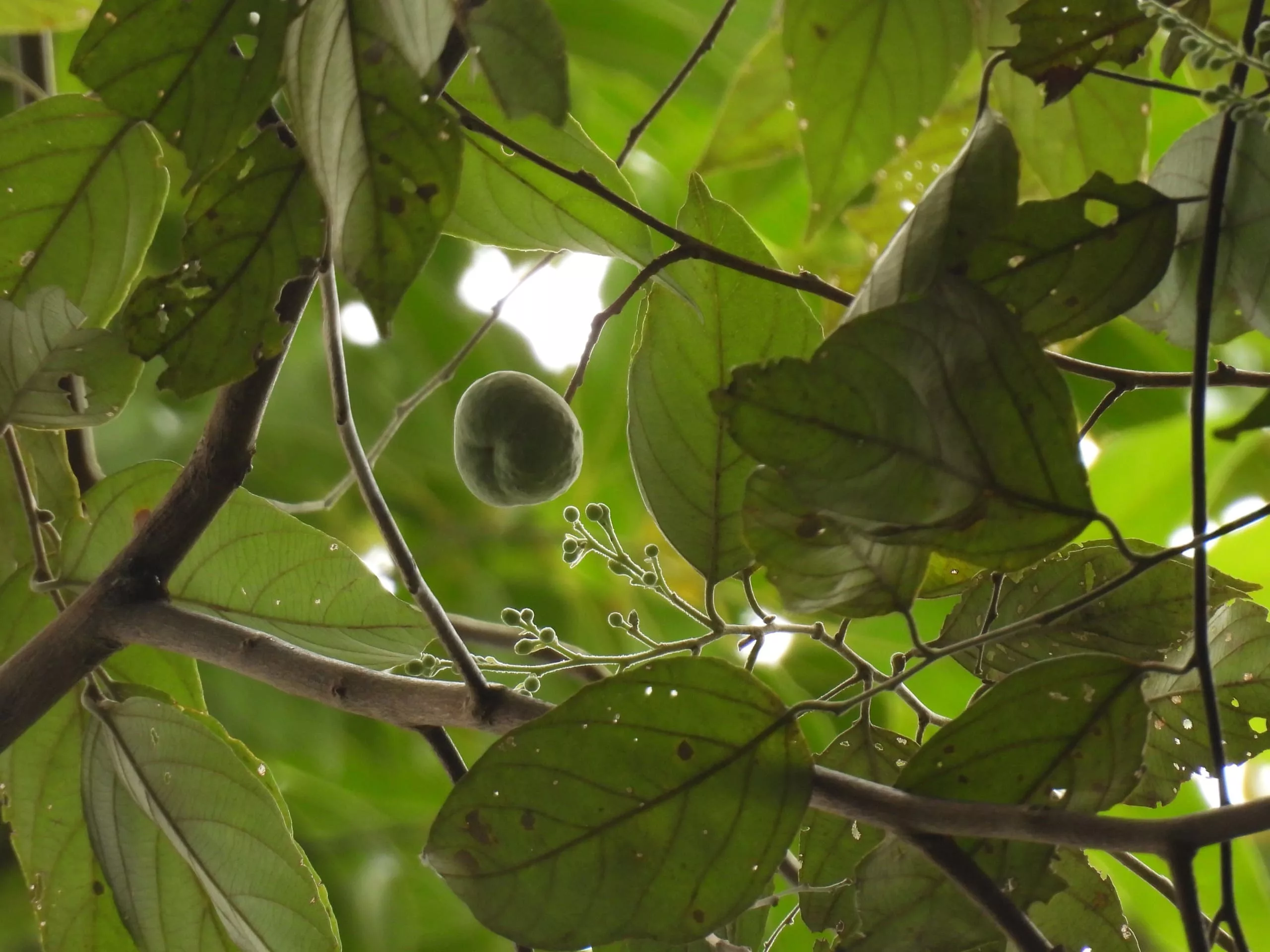
The benzoin tree can grow up to 34 metres tall, with a sturdy trunk reaching a diameter of up to 100 cm and numerous branches. Its young twigs are greyish, while the leaves are ovate to lanceolate, measuring 6–20 cm in length and 2–9 cm in width. The underside of the leaves is covered with fine white hairs, giving them a soft texture.
Its flower buds grow at the ends of branches or in leaf axils, extending 13–20 cm in length. The flowers are white, stalked, and emit a distinctive fragrance. The fruit is flattened, measuring 2–3.8 cm, and remains intact when ripe (indehiscent), containing one or two seeds that are pale to dull brown and 1.5–2 cm long. The benzoin tree has a taproot system supported by strong lateral roots, allowing it to anchor firmly into the soil.
Habitat and Distribution
The benzoin tree grows naturally in mixed primary forests with nutrient-rich clay soils, found at elevations between 100 and 1,600 metres above sea level. It is distributed across several Southeast Asian countries, including:
- Indonesia
- Peninsular Malaysia
- Myanmar
- Thailand
- Vietnam
Within its habitat, benzoin commonly grows alongside diverse tropical forest vegetation.
Ecological Role
The benzoin tree plays an important role in maintaining ecosystem balance, including:
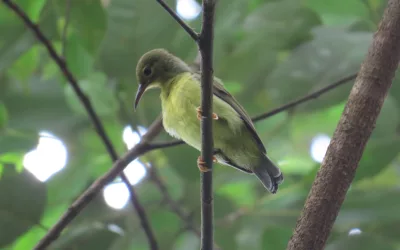
- Wildlife habitat: It provides shelter and food for primates, monkeys, squirrels, and various bird species.
- Carbon storage: With significant biomass, it helps absorb and store carbon, contributing to climate-change mitigation.
- Soil stabilisation: Its strong root system prevents erosion, especially on steep slopes or loose soil.
Benefits for the Environment and Communities
Beyond its ecological contribution, the benzoin tree offers numerous benefits to humans:
1. Land Reclamation
Benzoin is suitable for rehabilitating degraded land, including former mining areas, thanks to its resilience and ability to improve soil conditions.
2. Timber Potential
Its lightweight wood can be used for:
- matchstick production
- pencils
- light construction
- plywood
- handicrafts
3. Soil Conservation
Its robust root system helps maintain soil stability and preserve fertility.
4. Support for Wildlife Conservation
By providing habitat and food sources for primates and other forest animals, benzoin contributes to biodiversity conservation.
5. High-Value Resin Production
Benzoin resin is a valuable commodity used for:
- perfumes and fragrances
- traditional medicine
- aromatherapy
- incense