Deep within the lush Batang Toru Forest, each primate species has its own unique way of ensuring the survival of future generations. For them, the forest is not only a place to find food, but also a learning environment where young primates develop essential skills, understand their surroundings, and prepare for life in the wild.
Each mother follows a different parenting strategy. Some care for their young for many years, some rely on close family bonds, while others receive support from the entire group. Although their approaches vary, their purpose remains the same: ensuring the next generation grows strong and capable of surviving.
Tapanuli Orangutan: Learning from Mothers for Years
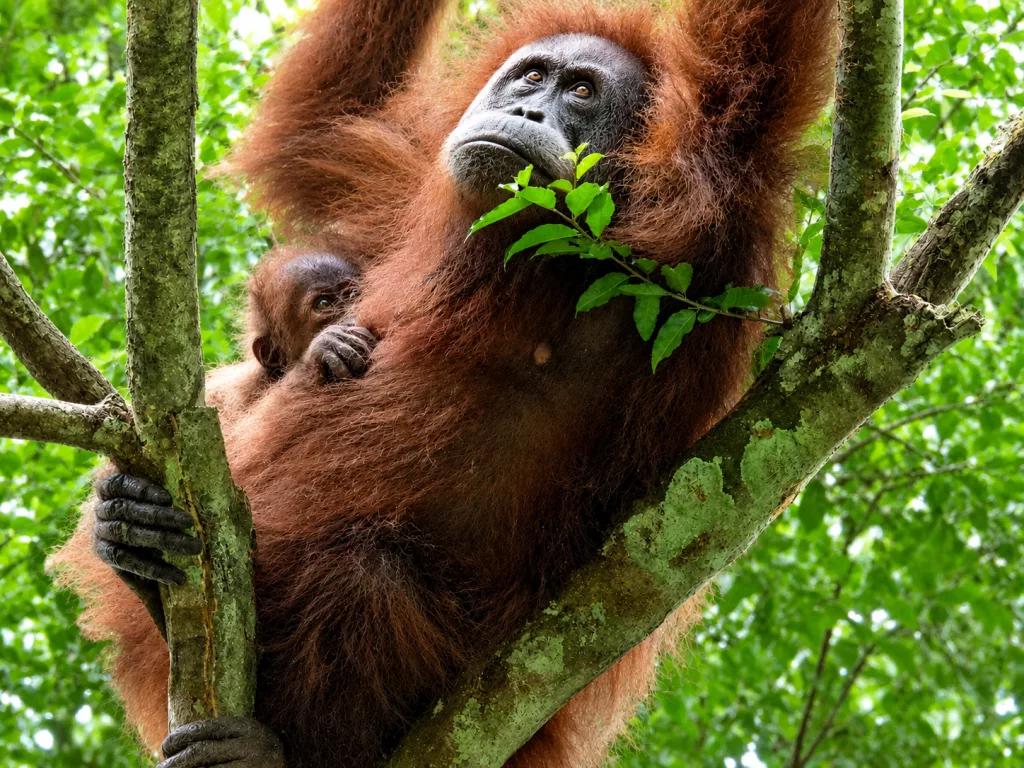
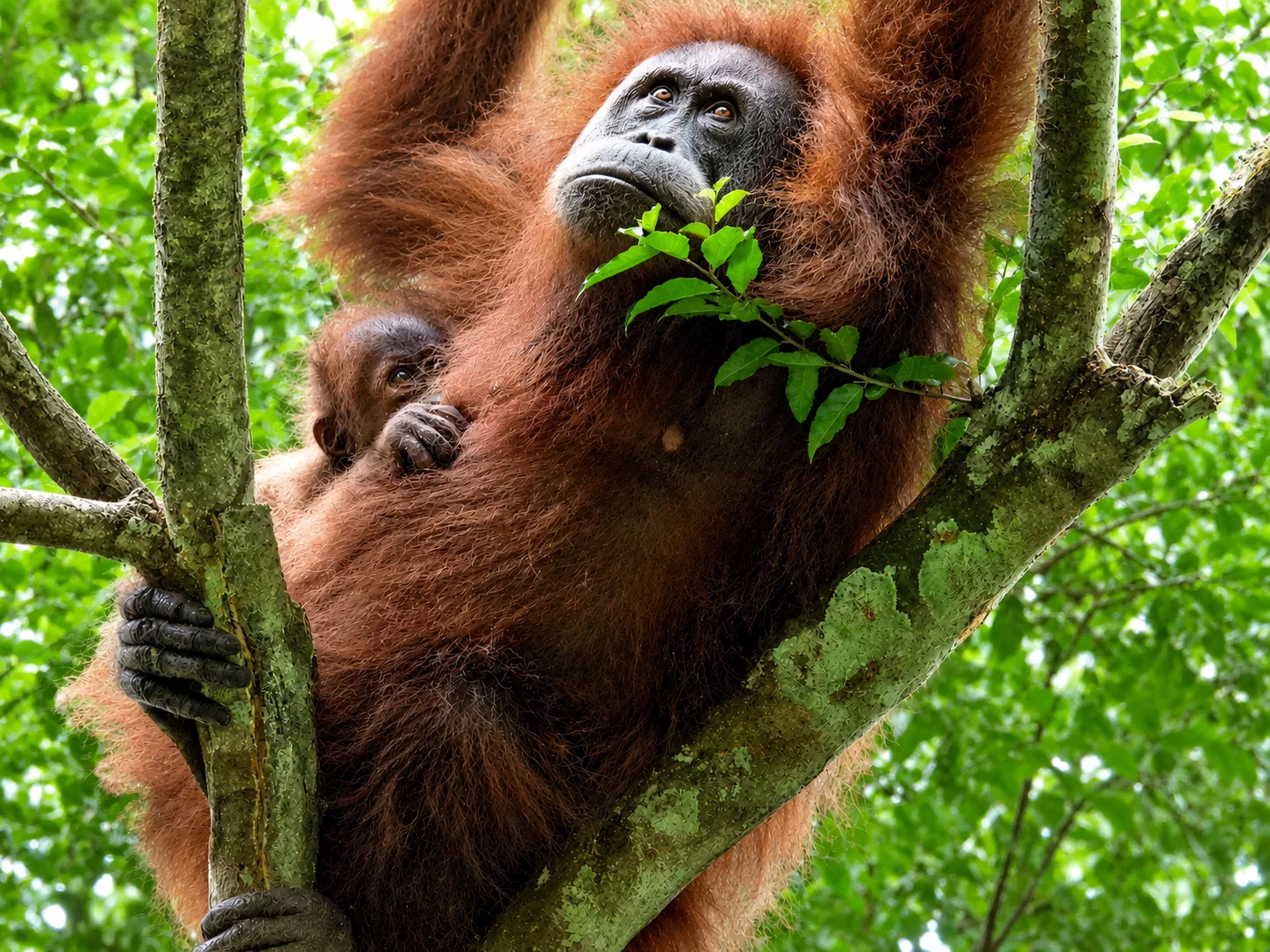
The Tapanuli orangutan (Pongo tapanuliensis) is one of the primates with the longest periods of parental care in the world. A mother orangutan stays with her offspring for six to eight years, teaching them essential survival skills.
During this time, young orangutans learn to identify safe plants for consumption, find food, build nests, and understand safe routes through the forest canopy.
This extended period of care results in a long birth interval of around seven to nine years. It highlights the important role of mothers in ensuring that each offspring develops sufficient skills before becoming independent.
Interesting fact: Orangutans have one of the longest birth intervals among mammals.
Agile Gibbon: Growing Up with Family
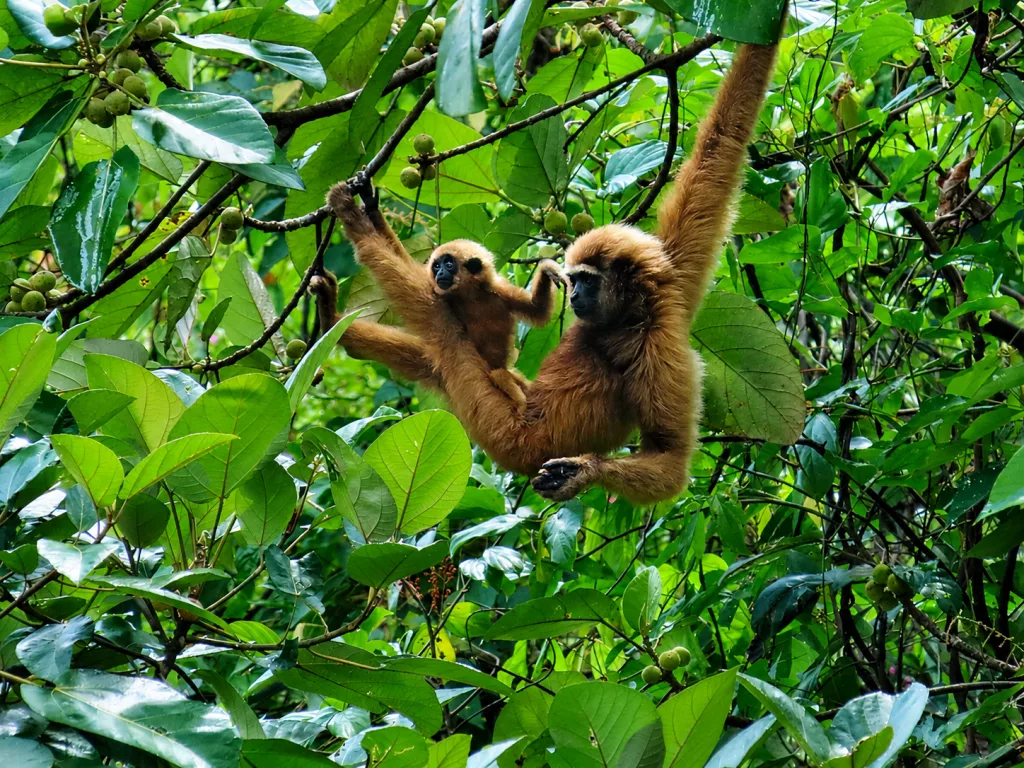
Unlike orangutans, which are more solitary, agile gibbons (Hylobates agilis) live in small family groups consisting of a breeding pair and their offspring.
From birth, young gibbons remain close to their mothers. They learn how to move through the treetops, swing from branch to branch, maintain balance, and recognise safe routes within the forest canopy.
Agile gibbons are also known for their distinctive morning calls. These vocalisations serve as a means of communication to mark territory and strengthen bonds among family members.
Interesting fact: Young gibbons can have different fur colours during their early years, which change as they mature into adulthood.
Dusky Leaf Monkey: When the Group Helps Raise the Young
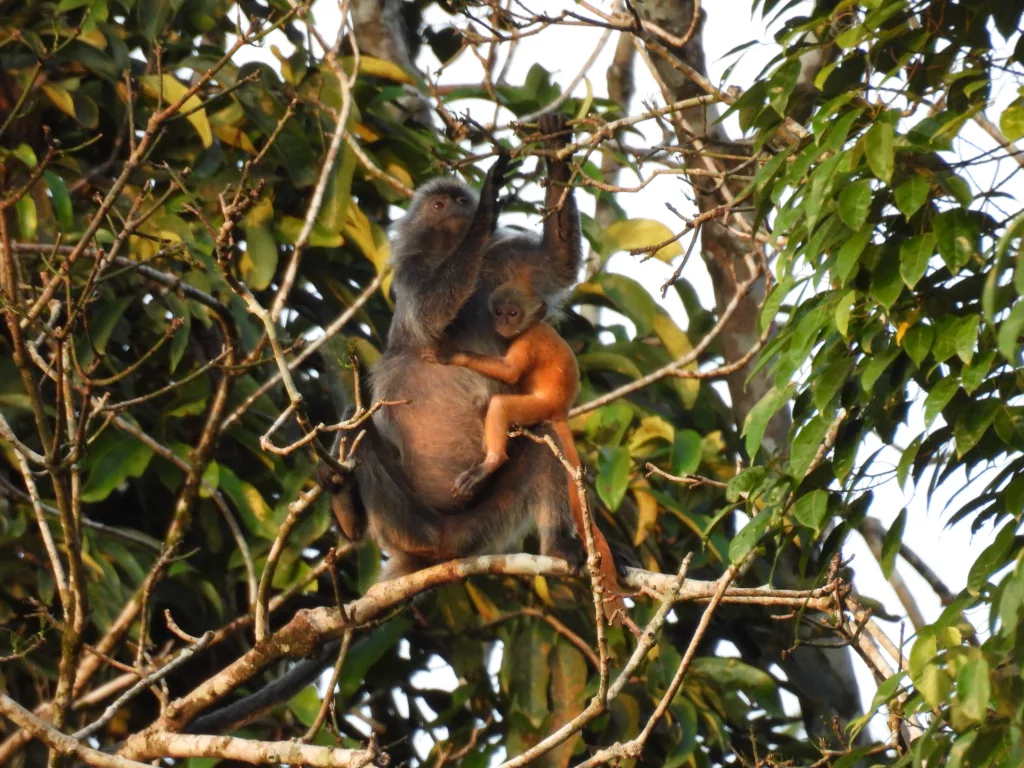
The dusky leaf monkey (Trachypithecus cristatus) has a fascinating parenting system because raising offspring is not limited to the biological mother.
Dusky leaf monkey infants are born with bright orange fur, which differs from the appearance of adults. This colour signals that the infant still requires attention and protection from the group.
Besides the mother, other adult females may also help carry and care for the infant. This behaviour is known as allomothering, or shared caregiving.
This strategy demonstrates that cooperation within a group plays an important role in increasing the chances of offspring survival.
Interesting fact: Infant dusky leaf monkeys develop greyish-brown fur when they are approximately three to six months old.
Long-tailed Macaque: Learning Through a Complex Social Life
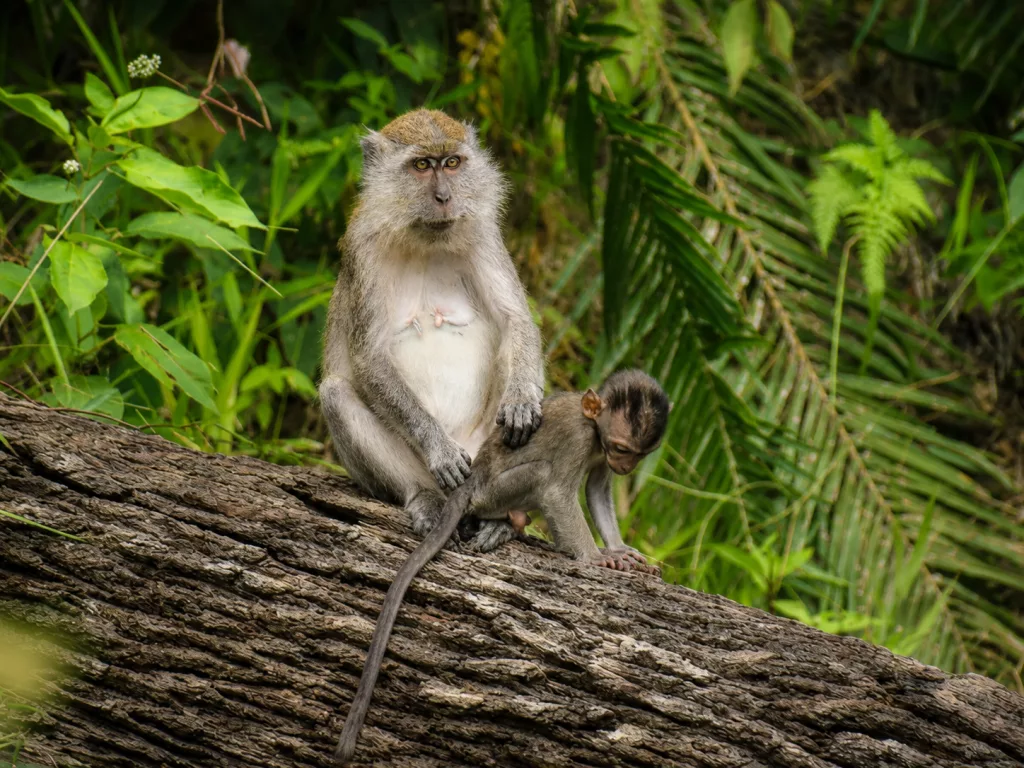
Long-tailed macaques (Macaca fascicularis) live in large groups consisting of many individuals with complex social relationships.
For mothers, raising offspring is not only about protecting them from threats, but also teaching them how to interact and understand the social structure of their group.
From an early age, young macaques learn to recognise group members, search for food, and build social relationships that help them adapt to life in the wild.
Interesting fact: Social relationships and the mother’s position within the group can influence a young macaque’s life experiences.
These four primate species demonstrate that every animal has a different strategy for raising the next generation. Orangutans highlight the importance of long-term learning, agile gibbons demonstrate the strength of family bonds, dusky leaf monkeys show the value of shared caregiving, while long-tailed macaques illustrate the importance of adaptation within social communities.
As part of its commitment to biodiversity management, Agincourt Resources continues to support wildlife conservation efforts in the Martabe Gold Mine area through research, monitoring, and sustainable habitat management.
Through its research station, which serves as a centre for scientific studies, education, and wildlife monitoring, Agincourt Resources, together with researchers and relevant stakeholders, collects data on primate populations, distribution, behaviour, and habitat conditions.
These findings serve as a scientific foundation for developing conservation strategies, including understanding population changes, identifying potential threats, and determining appropriate protection measures. Through a collaborative and data-driven approach, Agincourt Resources strives to ensure that primate populations in the Martabe area remain protected. Because when forests remain sustainable, the stories of primate mothers and their future generations can continue from one era to the next.