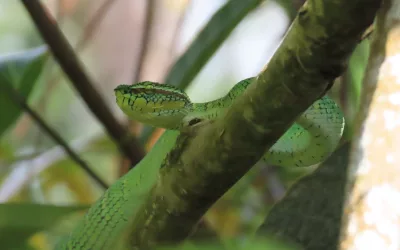
Lying still behind bushes, hiding among leaf litter, or moving slowly through the trees. This is how snakes live in the wild. Although they are often considered frightening when they appear near people, snakes generally prefer to avoid humans rather than confront...
Bird Monitoring Supports Biodiversity Conservation Efforts in Conservation Areas
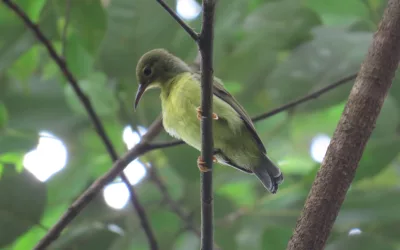
The presence of birds can serve as an important indicator of ecosystem health. In Agincourt Resources’ conservation areas, the Biodiversity Team of the Biodiversity and Environmental Strategic Development (BESD) Department regularly conducts monitoring activities to...
Sumatran Surili: Protecting an Endemic Primate through Monitoring and Habitat Conservation
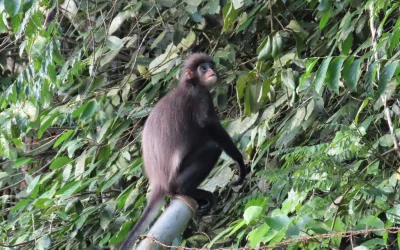
Biodiversity is an integral part of the ecosystem within the Martabe Gold Mine area. As part of its commitment to environmental conservation, Agincourt Resources continues to implement wildlife protection initiatives through a data-driven approach, including efforts...
Discovering the Corpse Flower (Amorphophallus) at the Martabe Gold Mine
The Batang Toru Forest in North Sumatra is one of Indonesia's richest biodiversity hotspots. In addition to being home to the critically endangered Tapanuli orangutan, the forest supports a wide variety of endemic plant species, including the corpse flower from the...
Advancing Responsible Mining Through Effective Environmental Management
Microclimate refers to atmospheric conditions on a local scale, encompassing vital parameters such as air temperature, relative humidity, wind speed and direction, and solar radiation within a specific area. Unlike macroclimatic conditions, a microclimate is heavily...
Pitcher Plant, Guardian of Ecosystem Balance
Behind its unique appearance, the Nepenthes plant, commonly known as the pitcher plant, plays an important role in maintaining the balance of tropical forest ecosystems. This carnivorous plant is recognised for its ability to trap insects using pitcher-shaped...