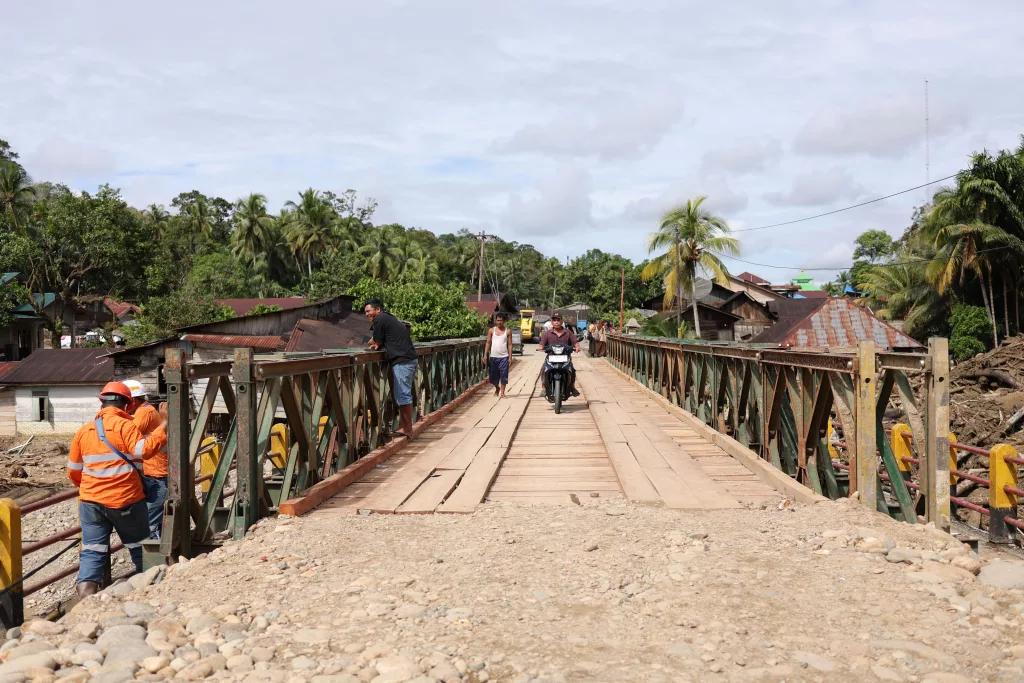
Flash floods and landslides that struck several areas in South Tapanuli Regency disrupted road access, hindered residents’ activities, and obstructed the distribution of aid. In such circumstances, the restoration of infrastructure became an urgent necessity to enable community mobility and to ensure a comprehensive post-disaster recovery process.
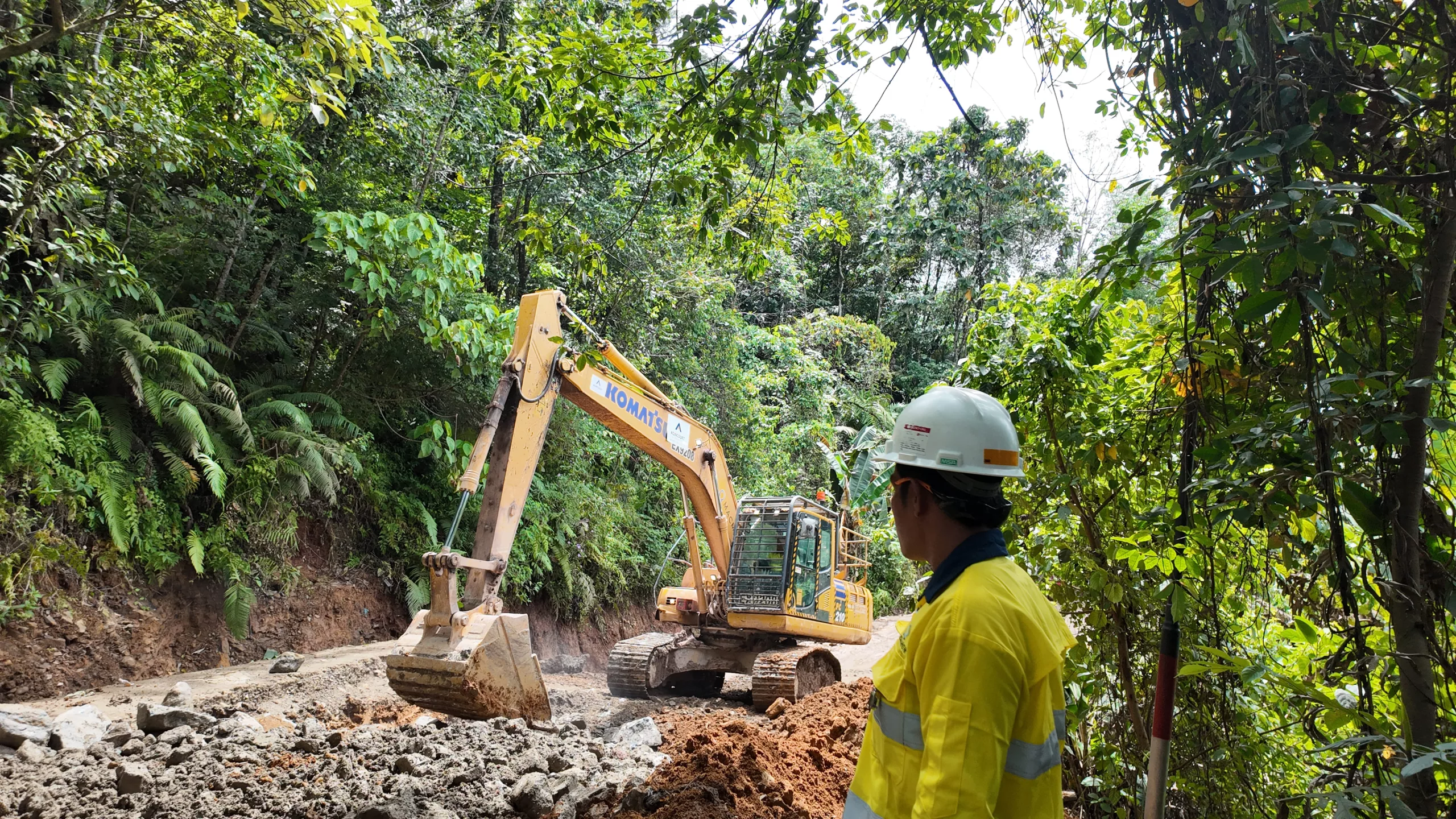
As part of humanitarian support, Agincourt Resources, together with PT Macmahon Mining Services (MMS), deployed heavy equipment to assist infrastructure recovery simultaneously across several affected areas. This deployment aimed to reopen roads, clear landslide debris, and support the rehabilitation of the environment and community facilities.
In Garoga Village, Batang Toru Subdistrict, heavy equipment was focused on reopening roads blocked by landslide material, filling in subsided road sections, and reshaping safe routes for residents and aid teams. Additionally, support was provided for the revitalisation of the Garoga River, previously blocked by timber and mud carried by the flash floods. Clearing the river channel aimed to restore water flow and reduce the risk of secondary disasters.
At the same time, heavy equipment support was also provided in Tobotan and Tanopongol Villages, West Angkola Subdistrict, as well as in Marancar Subdistrict. In these areas, the equipment was used to open and repair affected roads, ensuring smoother mobility for residents, logistics vehicles, and emergency services.
Meanwhile, in Bandar Hapinis, Muara Hutaraja Subdistrict, heavy machinery was deployed to restore inter-regional road access that had been cut off. Restoring this access served as a vital route for community activities and facilitated the distribution of aid and essential needs for affected residents.
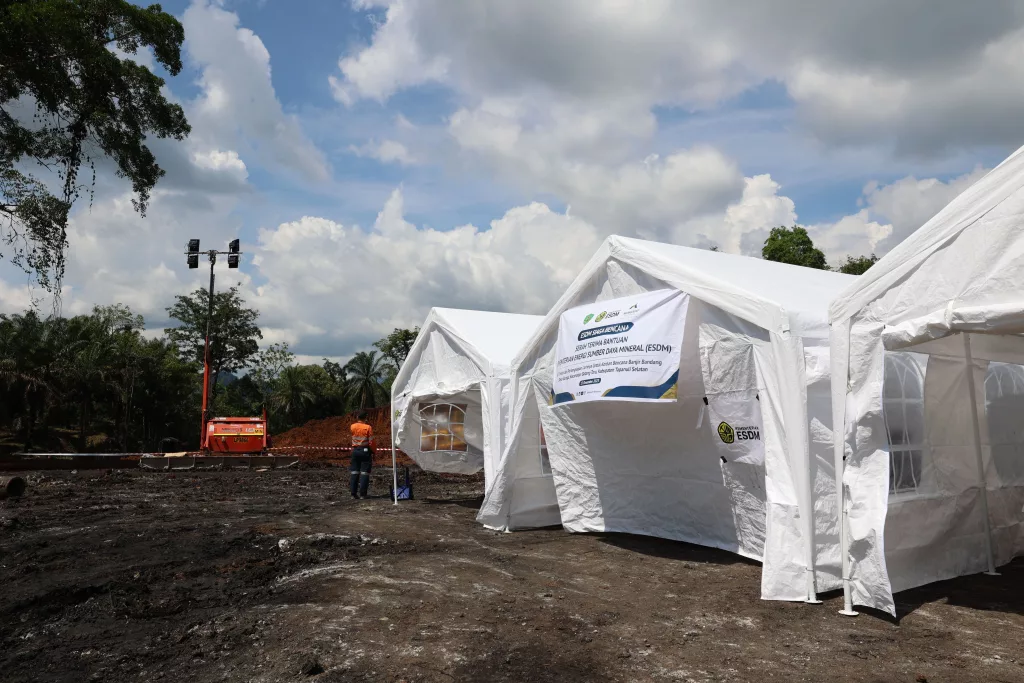
Beyond the restoration of roads and rivers, Agincourt Resources also supported the provision of temporary housing for disaster-affected residents. Through the deployment of heavy equipment, land clearing, soil preparation, and the organisation of temporary housing sites and supporting facilities were carried out. Overall, the construction of 267 temporary housing units is planned, with 70 units in the initial phase targeted for immediate occupancy.