Mining activities, while delivering economic benefits, also have the potential to alter environmental conditions, particularly in areas exposed by excavation processes. If not properly managed, these areas may experience erosion, slope instability, and a decline in soil quality, which can adversely affect surrounding ecosystems. For this reason, post-mining environmental restoration is a crucial step to ensure that affected areas can return to being safe, stable, and productive in the long term.
Agincourt Resources consistently prioritises environmental protection through various rehabilitation and revegetation programmes. These efforts are undertaken to minimise the negative impacts of mining activities by restoring land functions as close as possible to their natural condition. Such rehabilitation processes require careful planning and the application of appropriate methods to ensure effective and sustainable outcomes.
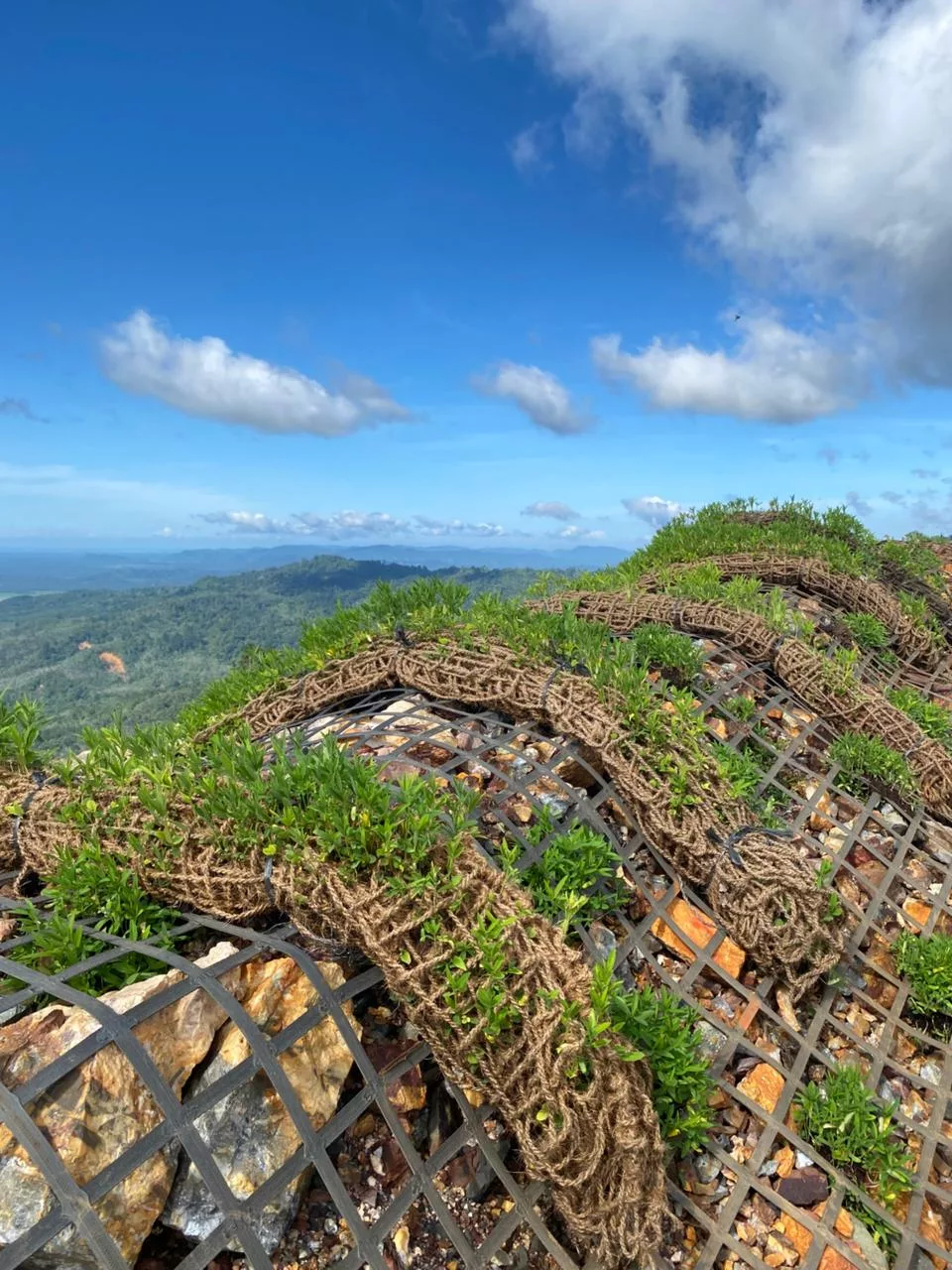
One of the revegetation methods implemented by Agincourt Resources is the pillow ball technique. This method serves as an environmental restoration solution, particularly for open areas that present technical challenges such as steep slopes, high erosion rates, or limited access. Under these conditions, conventional planting or seeding methods are often difficult to apply or result in low success rates.
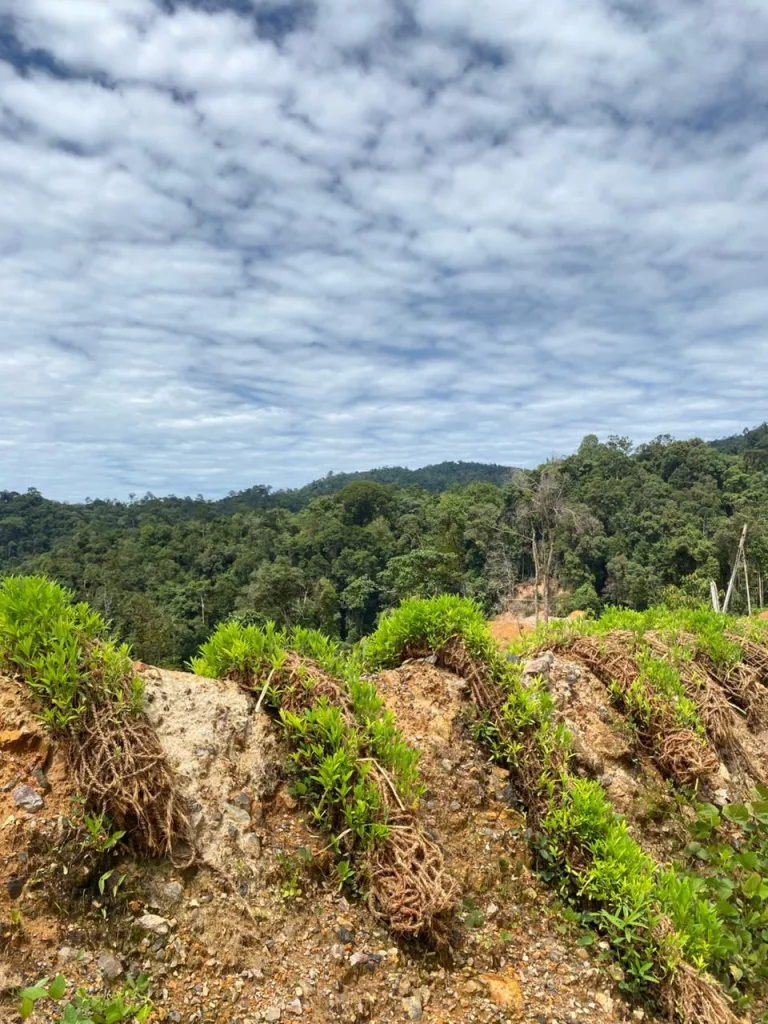
The pillow ball technique involves wrapping a mixture of compost, straw, organic materials (proganics), and ground cover plant seeds, namely Legume Cover Crops (leguminous plants used as ground cover), in coconut fibre netting (cocomesh). The wrapped materials are then shaped into elongated, pillow-like forms measuring up to approximately two metres in length, although the size can be adjusted according to site requirements and field conditions. The pillow balls are subsequently placed in the designated revegetation areas to support plant growth. The application of the pillow ball method offers several advantages, including:
- Accelerating germination, as the mulch mixture within the pillow ball helps maintain soil moisture, creating ideal conditions for seeds to germinate and develop strong root systems.
- Controlling erosion, with the mulch layer acting as a protective cover for the soil surface against the effects of rainfall, wind, and direct sunlight.
- Suitability for challenging terrain, such as steep slopes or areas with limited access, where conventional revegetation methods cannot be effectively implemented.
Through the implementation of the pillow ball technique, Agincourt Resources demonstrates its commitment to responsible environmental management. This method not only supports post-mining land restoration but also forms part of the company’s ongoing efforts to maintain a balance between operational activities and environmental sustainability.