In the forest, the canopy is more than just a collection of branches. For primates, it is a vital pathway—where they move, forage, and interact without descending to the ground. Yet when landscapes change, this connectivity is often disrupted.
At the Martabe Gold Mine, operated by Agincourt Resources, such changes have been recognised from the outset as risks to be managed, rather than avoided. From this awareness emerged a simple yet impactful solution: arboreal bridges.
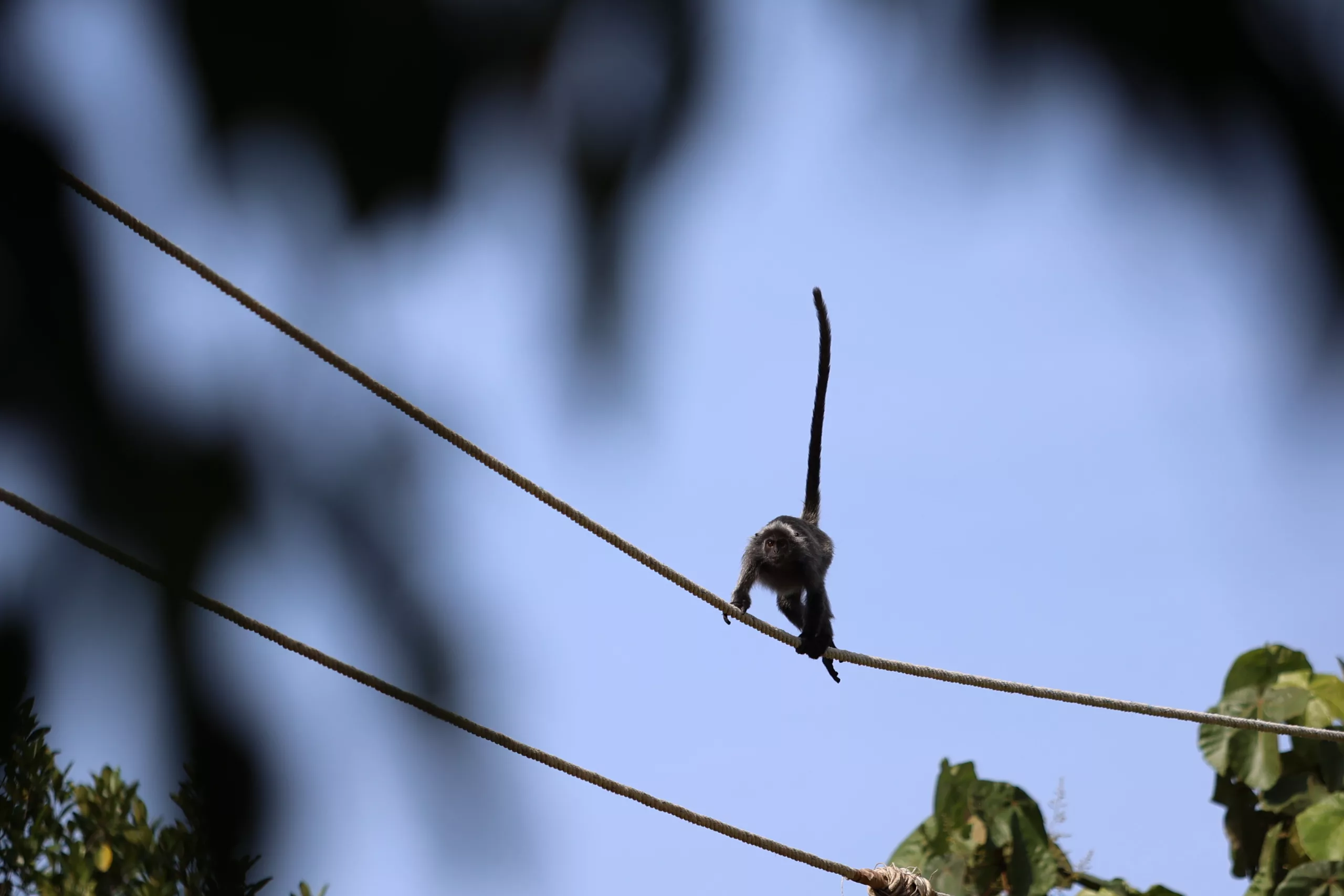
These bridges, constructed from ropes, reconnect fragmented forest patches. Their purpose is clear—to provide safe passage for primates to move without descending to the ground, thereby reducing risks from vehicular activity while maintaining essential intergroup interactions that support genetic continuity. More than mere connectors, these structures form part of a broader effort to preserve ecological balance.
To date, eight arboreal bridges have been installed across six operational areas at Martabe, including TMF East, WPP, Road 03, CH 2100, DNX, and Barani. Their design is far from arbitrary. Every element—from materials and curvature to rope tension—is carefully considered to align with the movement patterns of different primate species.
Some bridges utilise natural fibres such as coconut coir, offering an environmentally friendly option, while others employ synthetic materials to ensure greater durability against weather conditions. The approach remains straightforward: adaptive to wildlife needs while grounded in operational realities.
To ensure their effectiveness, Agincourt Resources has conducted ongoing monitoring using camera traps installed on the arboreal bridges since 2023. The findings reveal insights beyond mere usage data.
The cameras capture not only frequency of use but also behavioural patterns. Some primates initially show hesitation before gradually adapting. Others have even been observed playing on the bridges—an indication that these structures are increasingly accepted as part of their habitat.
Monitoring has also informed design improvements. For instance, larger primates require wider rope spans to maintain balance. In terms of materials, coconut coir has proven to be environmentally friendly and sufficiently robust, although it is less resilient to extreme weather compared to synthetic alternatives.
From a biodiversity perspective, six primate species have been recorded using these bridges—three classified as endangered and one as vulnerable according to the IUCN: Presbytis sumatrana, Macaca nemestrina, Macaca fascicularis, Trachypithecus cristatus, Hylobates agilis, and Nycticebus coucang.
Interestingly, each location demonstrates distinct usage dynamics. This suggests that while levels of activity may vary, all bridges are functional and utilised.
Ultimately, these arboreal bridges are more than small-scale infrastructure within a mining area. They represent a broader approach—one in which operational activities can coexist with efforts to safeguard wildlife. At the Martabe Gold Mine, sustainability extends beyond planning. It is realised through tangible solutions, even those that may appear simple. Because preserving forest connectivity means sustaining the life within it.