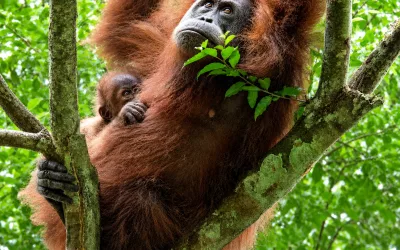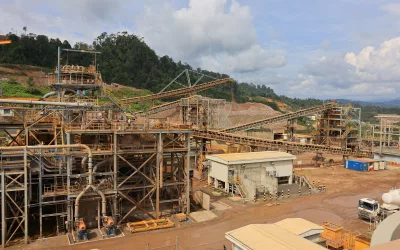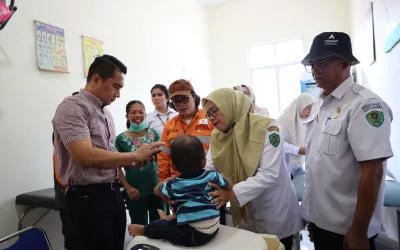
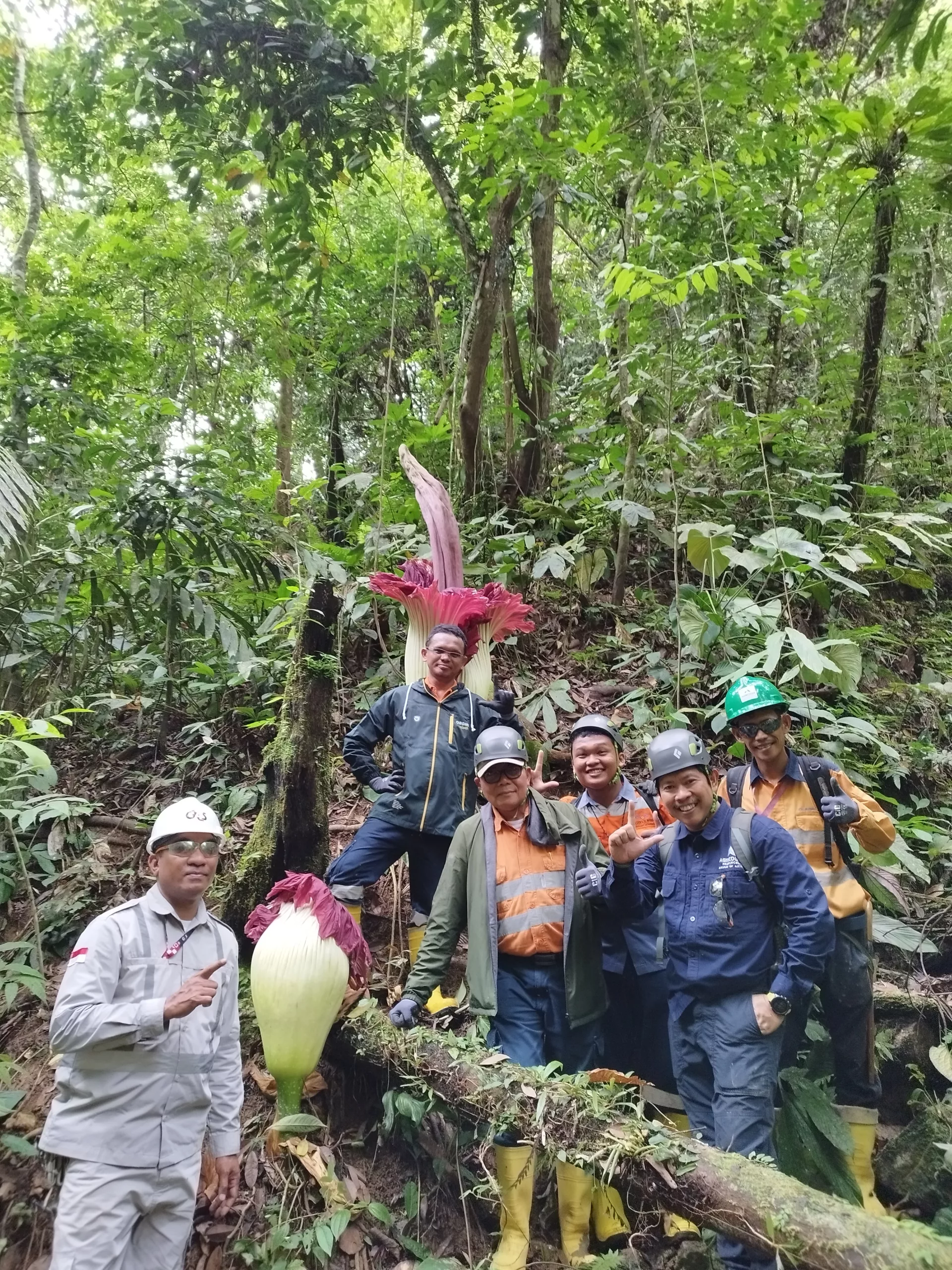
The Batang Toru Forest in North Sumatra is one of Indonesia’s richest biodiversity hotspots. In addition to being home to the critically endangered Tapanuli orangutan, the forest supports a wide variety of endemic plant species, including the corpse flower from the Amorphophallus genus. These remarkable plants have also been recorded within the Martabe Gold Mine area, reflecting the Company’s commitment to maintaining a balance between responsible mining operations and environmental conservation.
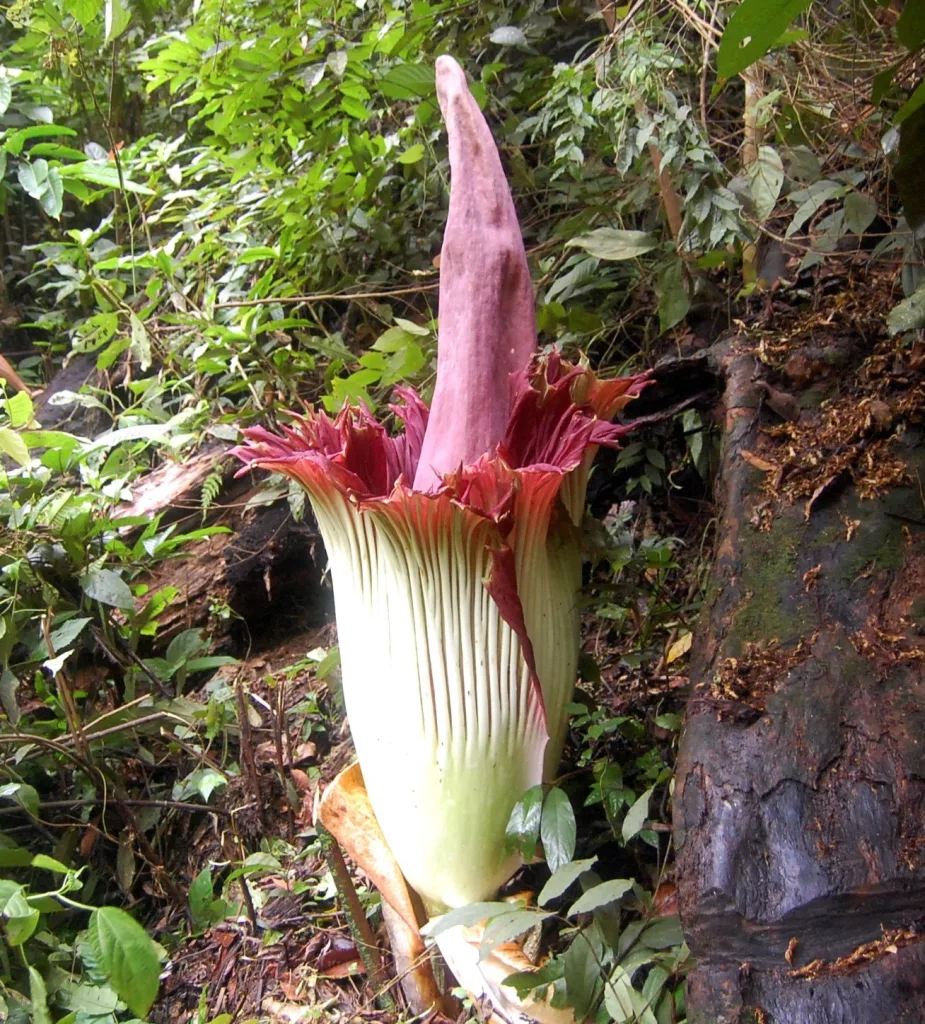
Several Amorphophallus species can be found in the Batang Toru landscape, including Amorphophallus titanum and Amorphophallus gigas. These plants naturally thrive on the damp forest floor, where the soil is rich in organic matter and sheltered from direct sunlight.
Distinctive Characteristics
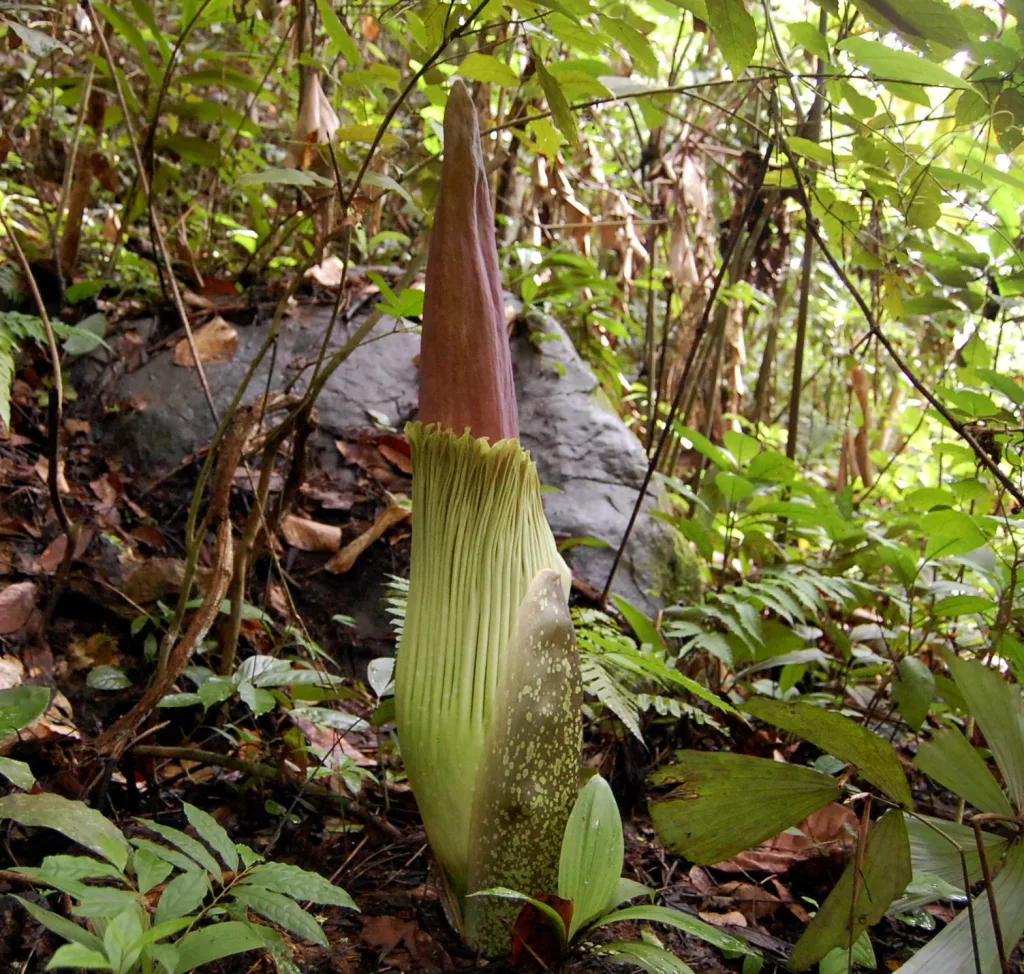
The corpse flower has several unique characteristics:
- It grows in humus-rich soil with a high organic content.
- It is typically found in shaded forest areas.
- Its flowering cycle is unpredictable and may occur only after several years.
- When in bloom, it emits a strong odour to attract pollinating insects.
Morphologically, the corpse flower consists of a spadix, the tall central flowering structure; a spathe, which surrounds the spadix; an underground tuber that stores energy reserves; and a single large leaf resembling a small tree during its vegetative stage.
An Important Role in the Ecosystem
Beyond its striking appearance, the corpse flower plays an important role in maintaining the balance of the forest ecosystem.
Its distinctive scent attracts flies and beetles, which serve as its natural pollinators. The presence of the species is also considered an indicator of a healthy forest, reflecting fertile soil, effective nutrient cycling, and relatively low levels of environmental disturbance.
The plant also interacts with various components of the ecosystem, including soil microorganisms, pollinating insects, and other vegetation growing on the forest floor.
Life Cycle
The life cycle of the corpse flower consists of four stages:
- Dormancy, when the tuber remains underground with no visible growth above the surface.
- Vegetative stage, during which a single leaf emerges to carry out photosynthesis.
- Generative stage, when the flower blooms for approximately one to three days.
- Return to dormancy, allowing the tuber to replenish its energy reserves before beginning the next cycle.
As its flowering cycle is highly unpredictable, each bloom is eagerly anticipated by environmental teams and researchers alike.
Although the species grows in relatively well-preserved habitats, it continues to face threats from habitat change, human activities, climate change, and land clearing.
To minimise these risks, Martabe Gold Mine implements a range of conservation measures, including:
- identifying and monitoring locations where corpse flowers grow;
- protecting their habitat by restricting activities around growth sites and establishing conservation zones;
- raising employees’ awareness of biodiversity through education programmes; and
- collaborating with researchers, conservation organisations, and universities to support research and the conservation of native flora.
In addition to its scientific value as a subject of botanical and ecological research, the corpse flower is an important symbol of Batang Toru’s extraordinary biodiversity. Its presence supports environmental education while highlighting the importance of conserving natural habitats. Interestingly, the corpse flower does not bloom every year. It may remain unseen for many years before flowering again, making each appearance one of the most remarkable biodiversity highlights within the Martabe Gold Mine area.