Mining activities often lead to land degradation, characterised by the loss of vegetation, depletion of topsoil, deterioration of soil structure, and increased levels of heavy metals. These conditions result in low organic matter content, limited cation exchange capacity (the soil’s ability to retain and supply nutrients), and extreme pH levels, making it difficult for plants to grow.
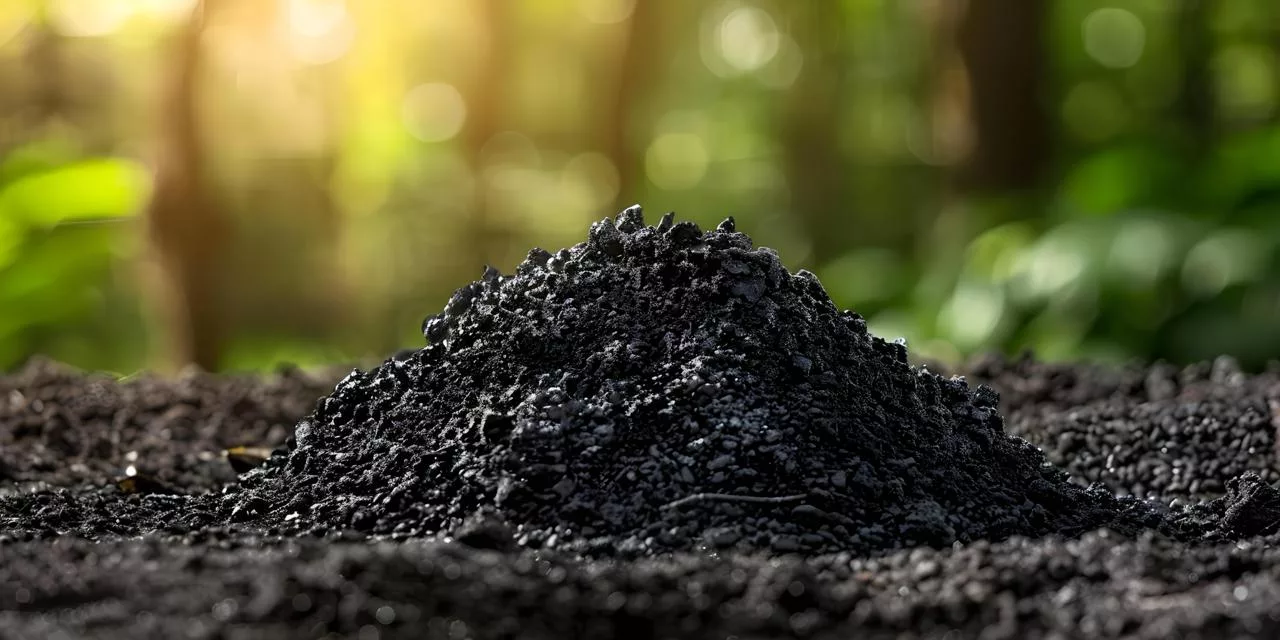
Biochar has emerged as a promising solution for land rehabilitation. It is a carbon-rich material produced through pyrolysis, a process that involves heating biomass at high temperatures with little or no oxygen. Unlike conventional charcoal, biochar is specifically designed to improve soil quality in a sustainable manner.
The application of biochar has been proven to enhance the physical, chemical, and biological properties of soil. Its key benefits include:
- Improving soil structure through its porous nature, which enhances aeration and root development
- Increasing the soil’s capacity to retain water
- Providing and storing essential nutrients such as nitrogen, phosphorus, and potassium in a more stable form
- Supporting the activity of soil microorganisms
- Reducing greenhouse gas emissions through long-term carbon storage
Biochar can be produced from various biomass wastes, including rice husks, straw, wood residues, and empty oil palm bunches. This utilisation also adds value by reducing waste.
In practice, biochar is incorporated into the soil prior to planting, with typical application rates ranging from 5 to 20 tonnes per hectare. For optimal results, it is often combined with compost, microbial inoculation (the addition of beneficial microorganisms), and phytoremediation (the use of plants to absorb contaminants). Biochar is also effective in stabilising mine tailings and reducing the mobility of heavy metals.
Its effectiveness depends on several factors, including the type of feedstock, pyrolysis temperature, and site-specific soil conditions. Therefore, its application should be tailored to the characteristics of the land.
Overall, biochar offers a practical and sustainable approach to support successful post-mining land reclamation and the restoration of ecosystem functions.