As global attention to climate change continues to grow, tropical forests are often described as the lungs of the Earth because of their ability to absorb carbon dioxide (CO₂). However, another ecosystem possesses an exceptional capacity to capture and store carbon: blue carbon.
Blue carbon refers to the carbon absorbed and stored by coastal and marine ecosystems, such as mangrove forests, seagrass meadows and tidal marshes. Unlike carbon stored in terrestrial forests, known as green carbon, blue carbon is primarily stored within underwater sediments. These conditions enable carbon to remain locked away for hundreds to thousands of years, making coastal ecosystems among the world’s most effective natural carbon sinks and valuable allies in climate change mitigation.
Mangroves: A Prime Example of a Blue Carbon Ecosystem
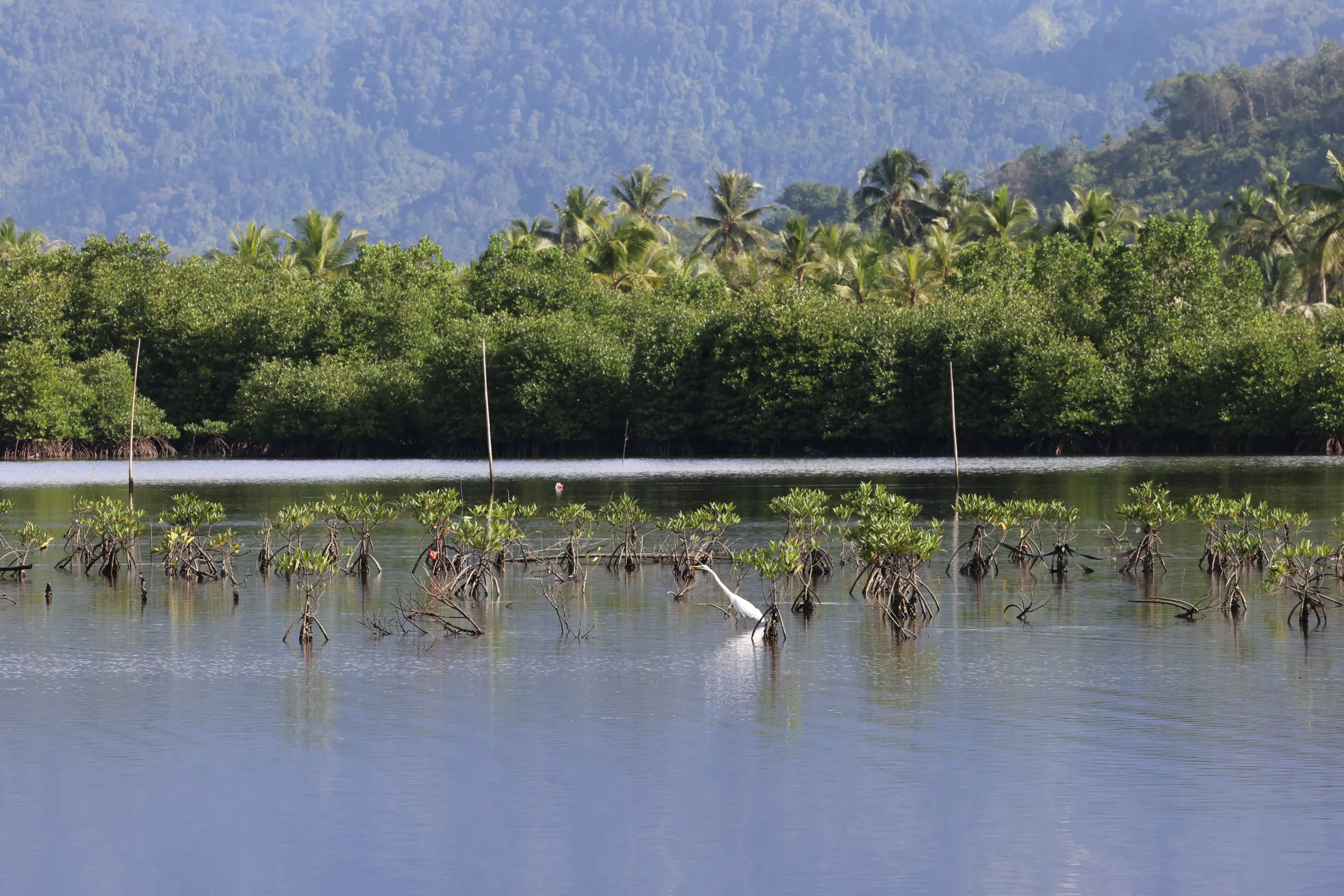
Among the various blue carbon ecosystems, mangrove forests are the most widely recognised. Mangroves thrive in coastal areas influenced by tidal movements and possess robust root systems that enable them to adapt to highly saline environments.
Through photosynthesis, mangroves absorb carbon dioxide (CO₂) from the atmosphere to support their growth. This carbon is stored not only in their trunks, leaves and roots, but also accumulates within the sediments beneath the mangrove stands. As leaves, branches and roots naturally die and fall, the organic material becomes buried in oxygen-poor sediments. Because decomposition occurs very slowly under these conditions, the carbon remains locked away for hundreds, or even thousands, of years, provided the mangrove ecosystem remains undisturbed.
In addition to mangroves, seagrass meadows and tidal marshes also play a vital role in storing blue carbon. Together, these three ecosystems naturally absorb carbon while maintaining the ecological balance of coastal environments.
Thanks to this natural process, coastal ecosystems can capture and store carbon at rates of up to ten times faster per hectare than tropical terrestrial forests.
The benefits of blue carbon extend far beyond reducing greenhouse gas emissions.
Mangrove forests serve as natural coastal defences, protecting shorelines from erosion, dissipating wave energy, reducing the impacts of storms and strengthening resilience against sea level rise. Meanwhile, seagrass meadows act as natural filters by trapping sediments and pollutants, helping to maintain water quality and support the health of surrounding marine ecosystems.
Coastal ecosystems also provide vital habitats and nursery grounds for a wide range of marine life, including fish, crabs, shellfish, sea turtles, seabirds and many other species. Their presence supports sustainable fisheries, conserves biodiversity and creates opportunities for ecotourism that generate long-term economic benefits for coastal communities.
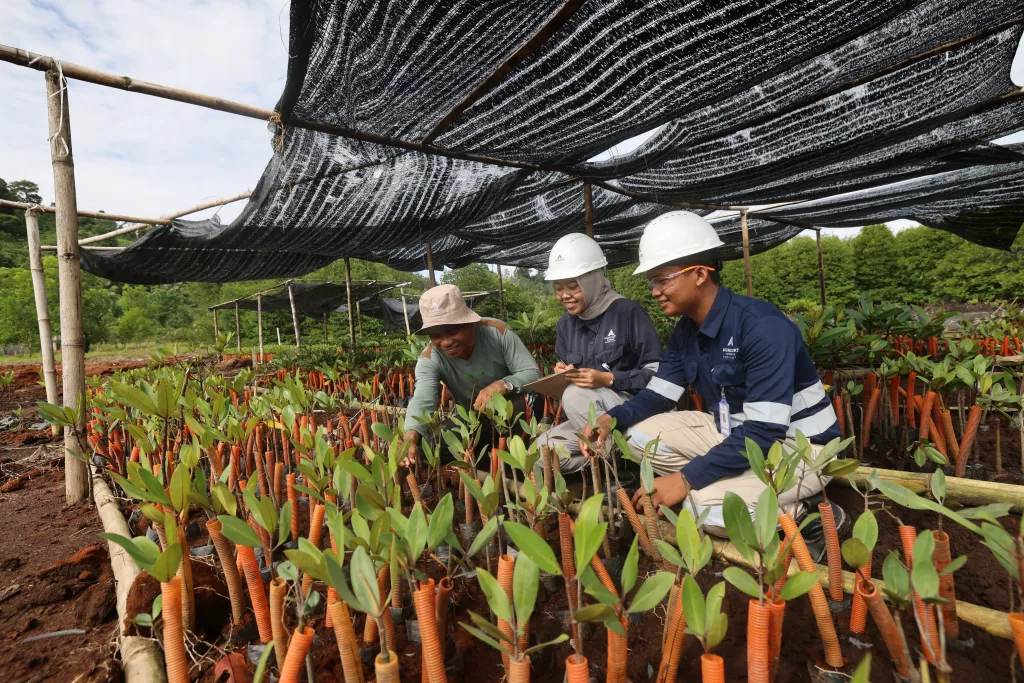
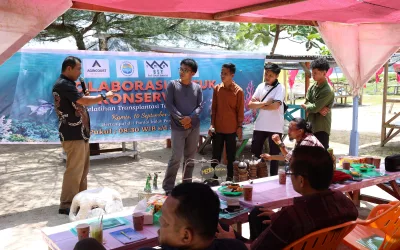
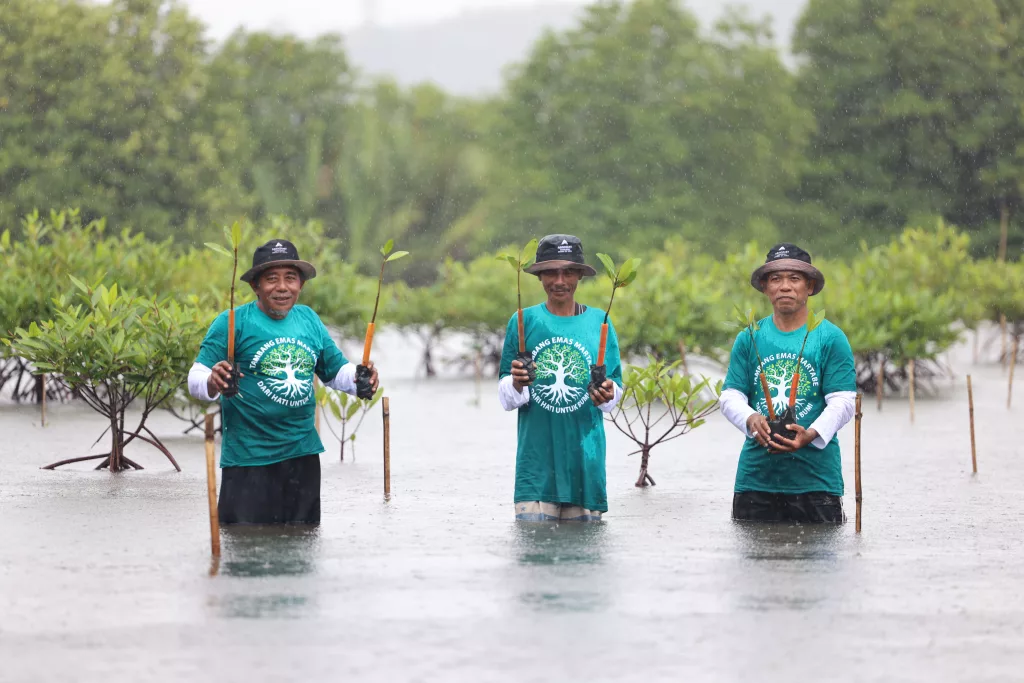
As part of its commitment to sustainable environmental stewardship, Agincourt Resources has been undertaking mangrove ecosystem rehabilitation in the coastal area of Pandan Bay, Central Tapanuli Regency, since 2024.
The programme has restored 29 hectares of coastal habitat through the planting of more than 90,000 mangrove seedlings. In addition, the company has released tens of thousands of young shellfish and crabs as part of wider efforts to restore the ecological functions of the coastal ecosystem.
Based on current estimates, the rehabilitated area has the potential to store approximately 2,044 tonnes of carbon (C), equivalent to around 7,503 tonnes of carbon dioxide (CO₂). This initiative not only contributes to greenhouse gas emission reduction targets but also strengthens coastal ecosystem protection, conserves biodiversity and delivers lasting environmental and socio-economic benefits for local communities.