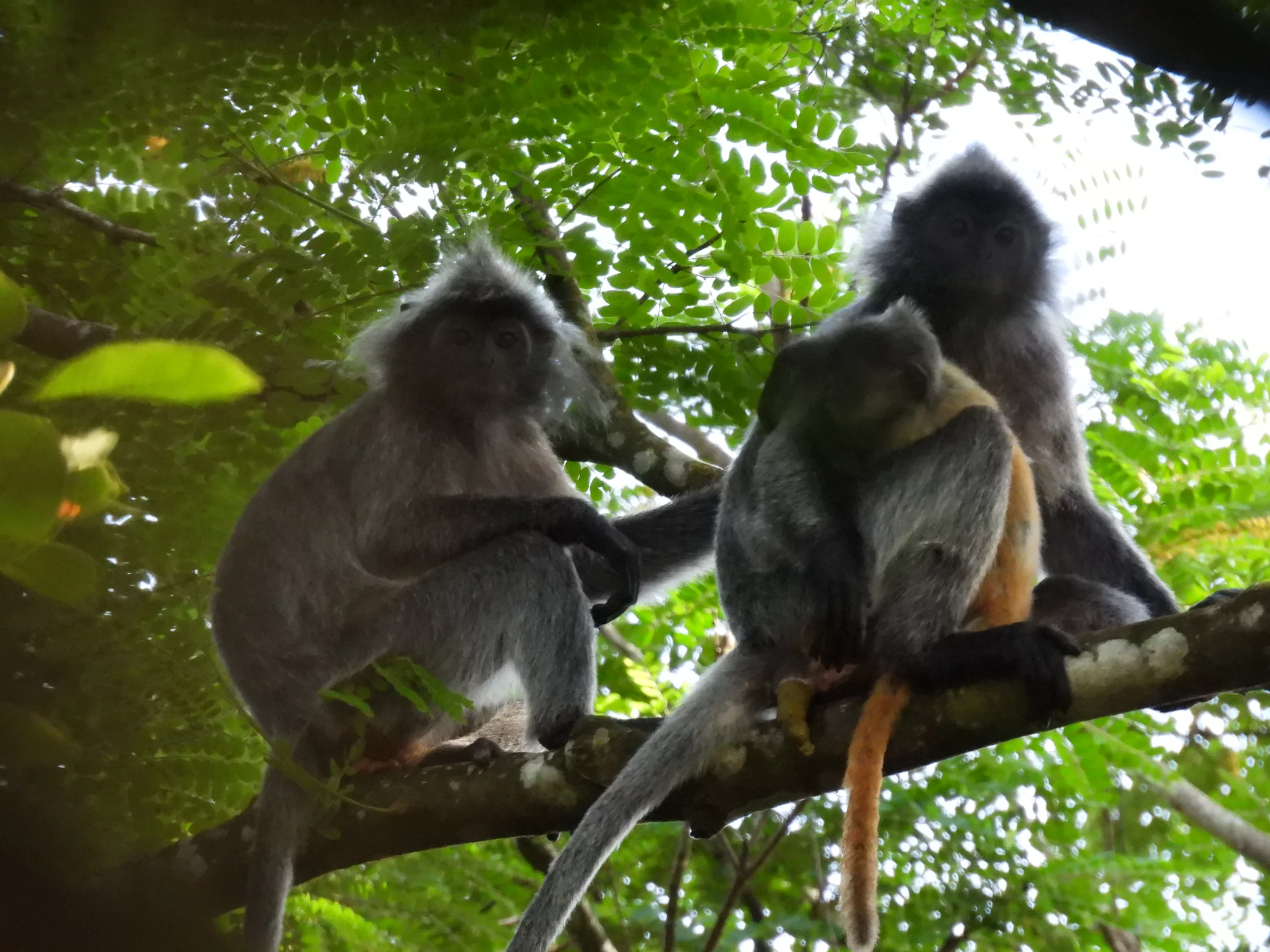
Among the lush forest canopy, the silvery lutung (Trachypithecus cristatus) spends most of its life in the trees. This medium-sized primate can be found in coastal, mangrove, and riverine forests across Sumatra, Borneo, and Java, as well as parts of the southwestern Malay Peninsula and nearby islands.
The silvery lutung is easily recognised by its dark brown or black fur with grey tips, giving it a distinctive silvery appearance. As an arboreal species, it rarely leaves the trees. Silvery lutungs live in groups of around 9–40 individuals and may travel up to 500 metres through the forest during the day. Interestingly, adult females within the group share responsibility for caring for their young.
The silvery lutung’s survival is also closely linked to forest vegetation. It is primarily a leaf-eater, with leaves making up the largest proportion of its diet, although it also consumes fruit, seeds, and flowers. When sharing its habitat with other primate species, the silvery lutung is more commonly found in the middle canopy of the forest.
In the wild, the species faces a range of challenges. The silvery lutung is classified as Vulnerable on the IUCN Red List, listed in Appendix II of CITES, and protected under Indonesia’s Ministry of Environment and Forestry Regulation No. 106 of 2018. Its habitat is threatened by logging and the development of oil palm plantations, while hunting and capture for the pet trade pose additional threats to its survival.
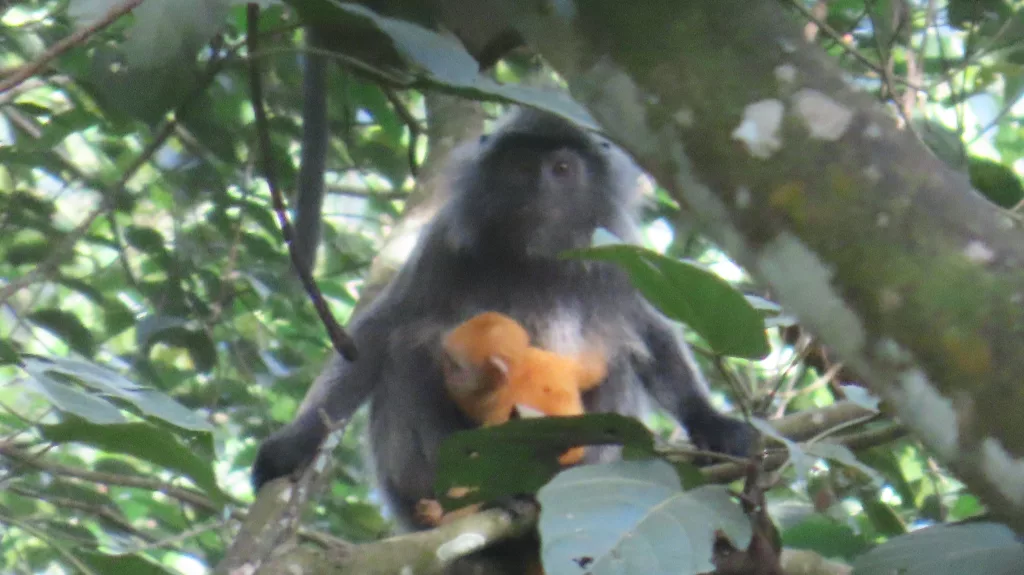
Protecting forest habitats means preserving the space silvery lutungs need to find shelter, forage, and thrive. When the canopy remains protected, the life that depends on it has a greater chance to endure.